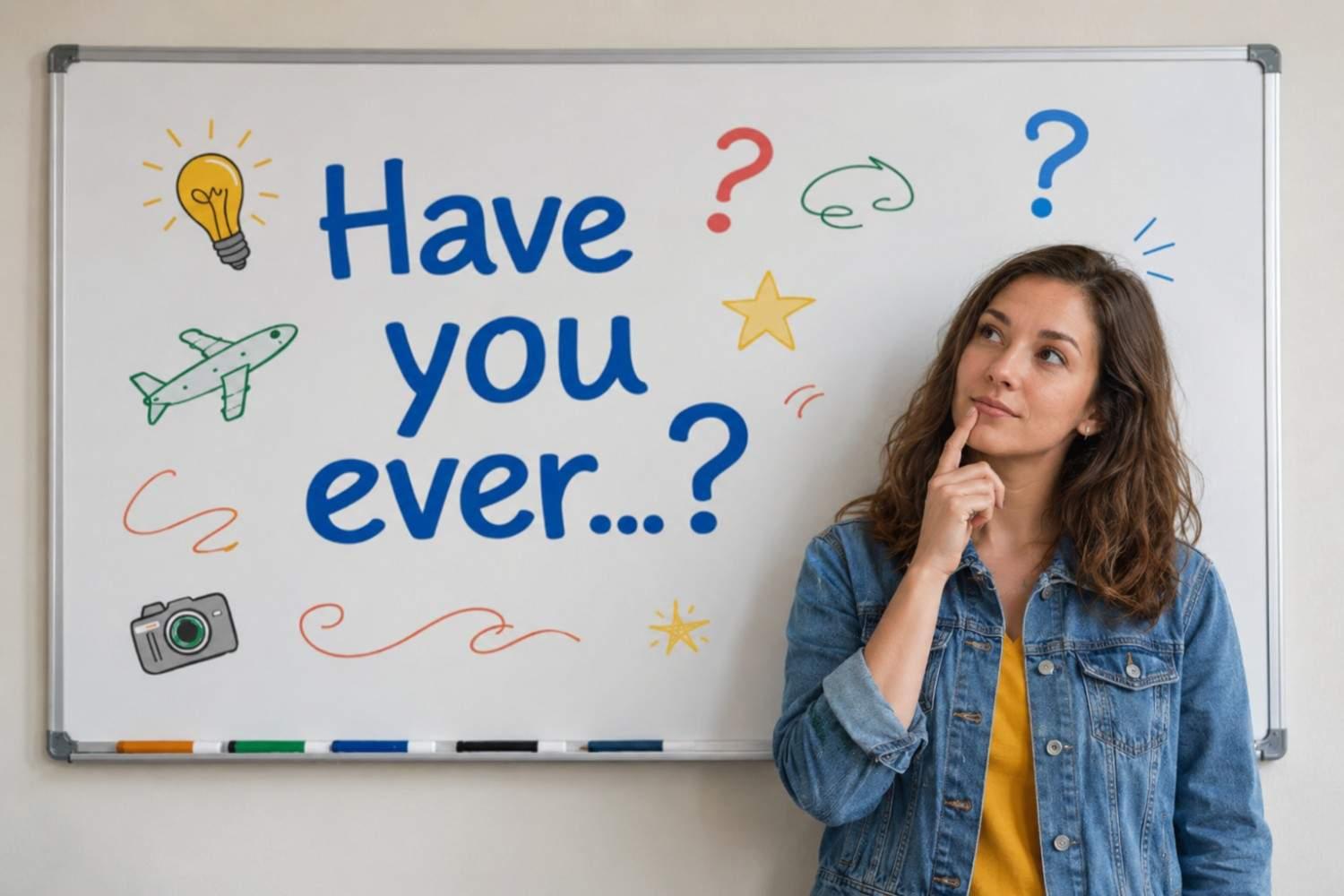
 "Have You Ever...?" Present Perfect ESL Lesson Description
OVERVIEW & OBJECTIVES
This ESL lesson plan on present perfect vs. past simple offers engaging activities, PDF worksheets, and digital materials designed for B1 students. In this lesson, students will:
- Talk about life experiences using “Have you ever…?” questions and short follow-ups.
- Learn and use vocabulary related to experiences, routines, and trying new things.
- Work with a short text example about travel experiences.
- Understand and practice the difference between the present perfect and past simple.
- Use both tenses in guided speaking and a personalized discussion task.
WARM-UP ACTIVITY
Students begin this present perfect ESL lesson by looking at images that show different life experiences, such as speaking in public, running a marathon, solving a puzzle, trying unusual food, wearing costumes, and taking a hot air balloon ride. Students choose which statement best matches their experience and share short answers using the present perfect. They then explain their choices and give simple reasons, which encourages natural speaking and introduces the lesson theme.
After that, think about one special experience from their own lives that was fun, challenging, or memorable. They answer guided questions about what they did, when and where it happened, who they were with, and how they felt afterward. This part naturally leads students to use the past simple for details.
They read short opinions about trying new things and complete sentences with missing verbs related to comfort zones and routines. They discuss which person is the most or least adventurous and explain which opinion is closest to their own.
TARGET LANGUAGE STUDY
Students read a short text about a person’s travel experiences and identify examples of the past simple and present perfect. They sort these examples into a table, which helps them notice differences in form and use.
In the next part, they answer guided questions about how the two tenses are used differently and which time expressions are common with each one. This helps students connect grammar form with meaning and time reference.
Finally, they complete a verb table using the verb “to go” and compare affirmative, negative, and question forms in the past simple and present perfect. This reinforces structure and highlights key differences between the two tenses.
PRODUCTION PRACTICE
Students complete a dialogue by choosing the correct form of the past simple or present perfect. The dialogue focuses on talking about experiences and giving specific details, which mirrors real-life conversation.
Then they write questions based on given answers and decide which tense is needed in each case. This activity helps students think carefully about meaning, time reference, and verb choice.
YOUR LIFE IN THE PRESENT PERFECT: EXPERIENCES & DISCUSSIONS
Students write their own present perfect questions about life experiences using provided verbs or their own ideas. They then work with a partner or the teacher and take turns asking and answering questions. Students follow up with past simple questions to give more details and use clear time expressions.
As an alternative option, students choose from a set of ready-made questions and discuss them with a partner or the teacher. They talk about places they have not visited, activities they have tried, nervous experiences, and meaningful gifts. The lesson ends with students reflecting on which experiences they found most interesting.
BENEFITS OF USING THIS PRESENT PERFECT VS. PAST SIMPLE ESL LESSON
This Present Perfect vs. Past Simple ESL lesson gives teachers a clear structure for teaching a common grammar challenge at B1 level. It supports meaningful speaking, clear grammar focus, and guided practice. It helps students connect grammar with real experiences. It works well in one-to-one and group classes. It provides ready-to-use materials that save preparation time.
 Lesson Activities
Life Experiences, New Activities, Travel Experiences, Personal Challenges, Comfort Zones, Past Events
Experiences, Travel, Routines, Challenges, Feelings
Past Simple Vs. Present Perfect (for life experiences)
Have you ever...?
Personal Interviews, Quiz & Review, Lesson Reflection
 Lesson Topics
Grammar, Experiences, Travel, Personal Growth, Communication
"Have You Ever...?" Present Perfect ESL Lesson
Have You Ever…? — Life Experiences Worth Talking About
Grammar Focus
 01/20/2026
 4444
4444


UNLOCK FULL LESSON MATERIALS
Buy this lesson to unlock the following materials:
 Printable PDF Lesson Plan
 Interactive PDF Lesson Plan
 Google Slide Lesson Plan
 Teacher's Guide
 Unlock Lesson For $3.49
 Log in
Lesson Plan Preview


Your download is ready. You can open your lesson from your device or in your browser. Enjoy your lesson!
Have You Ever…? — Life Experiences Worth Talking About
 Like us on facebook
Thanks for your like!
Like us on facebook
Thanks for your like!

 Sign in with Google
 Sign in with Facebook
Do you want to save this lesson to favorites for later?